
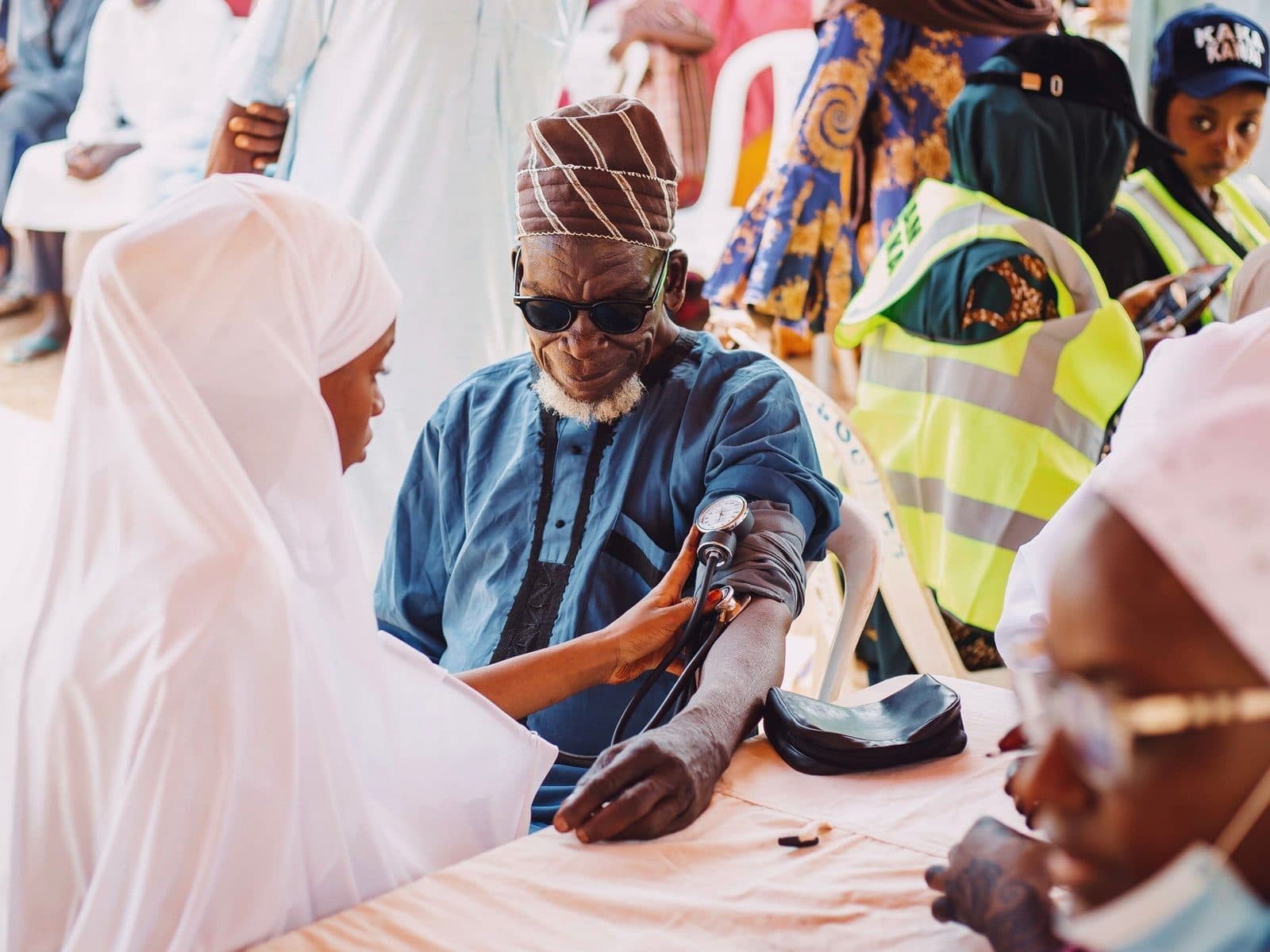
This guide is for Ivorians in the diaspora who are staying in the country, caring for a relative there or moving back. It brings together the official rules on vaccines, malaria, medicines, the CMU and emergencies, with the bodies to consult. It replaces neither a doctor’s advice nor your insurer’s.
How do you prepare your health before a trip to Côte d’Ivoire?
See a doctor or an international vaccination centre at least one month before you leave. That is the time the Institut national d’hygiène publique (INHP, national public health institute) considers best for carrying out all the necessary vaccinations.
The appointment is for checking your vaccinations, getting suitable malaria prevention and reviewing any current treatment. The programme depends on the person, the type of stay, its length and living conditions on the ground. Only a health professional can draw it up.
Also check what your health insurance and assistance contracts cover for care received in Côte d’Ivoire.
- International certificate of vaccination with yellow fever.
- Current prescriptions, with the names of the active substances (international non-proprietary names).
- A supply of medicines for the whole stay, in their original packaging.
- Insurance or assistance certificate, with the number to call.
- Contact details for your GP and for your relatives on the ground.
Which vaccines for Côte d’Ivoire: compulsory and recommended?
The yellow fever vaccine is compulsory to enter Côte d’Ivoire. The Ivorian Ministry of Foreign Affairs states this in its travel advice, and the INHP restates it for any travel in the intertropical zone of Africa.
Proof of vaccination is the international certificate of vaccination, presented at health checks at points of entry. Since 15 April 2026, Côte d’Ivoire has issued a new certificate, secure and bilingual French-English. The INHP states that a single dose of yellow fever vaccine now protects for life: it no longer needs to be repeated every ten years.
The INHP strongly recommends the hepatitis A vaccine for any stay in a country with low health standards. It also offers vaccines against hepatitis B, typhoid, influenza, tetanus and meningitis. Which of them apply to you and your children is a matter for medical advice. Remember the boosters for routine vaccines too.
On the ground, the INHP’s international vaccination centre is open Monday to Friday from 7.30 a.m. to 2.30 p.m. and on Saturday from 8 a.m. to 12 noon, except public holidays. The INHP shows a price of 5,500 FCFA for yellow fever with the certificate sticker. The institute also has branches in many towns across the country.
Malaria in Côte d’Ivoire: how do you protect yourself?
Malaria accounts for nearly 30% of medical consultations in Côte d’Ivoire, according to the Ministry of Health. Incidence is falling, from 270 cases per 1,000 inhabitants in 2024 to 231 at the end of 2025, and about 100 per 1,000 in a lower-transmission area such as Abidjan. The risk is therefore still present everywhere, including in towns.
The Ivorian Ministry of Foreign Affairs describes preventive treatment against malaria as “strongly advised” for travellers. This treatment is prescribed: the medicine, the duration and the contraindications depend on your health, your age and any pregnancy. Ask your doctor for it before you leave and follow the prescription to the end.
Having grown up in the country does not exempt you from these precautions. After several years abroad, don’t count on protection acquired in childhood, and bear in mind that children born outside the country have never been exposed. Talk to your doctor about it.
The Programme national de lutte contre le paludisme (national malaria control programme) stresses simple steps. Any fever, during the stay or after it, should lead you to see a doctor without delay rather than treat yourself.
- Sleep under an insecticide-treated mosquito net, especially children.
- Get rid of standing water around your home.
- Go to the hospital or health centre at the first signs of fever.
- For a pregnant woman, keep up antenatal care.
- For a child under 2 who lives in the country, have them vaccinated.
Dengue, rabies and other common health risks
Dengue also circulates in Côte d’Ivoire, and the Ministry of Health has already declared several epidemics there. It is a viral disease transmitted by the tiger mosquito, striped black and white, which bites during the day, especially between 4 p.m. and 6 p.m. A mosquito net at night is therefore not enough: protect yourself during the day as well.
The ministry recommends covering water containers, throwing away objects that hold water, changing the water in flower pots every two to three days and fitting screens on doors and windows. For any fever, it asks people to avoid self-medication and to go immediately to the nearest health centre.
Rabies is monitored by the INHP, which has an anti-rabies centre. After an animal bite or scratch, see a doctor without delay. Since 1 July 2024, rabies vaccination there has been given intradermally, at 2,000 FCFA a dose, according to a protocol of several visits.
For water, food and heat, ask your doctor for advice before you leave, especially for a child, an elderly person or a pregnant woman.
Travelling with your medicines and avoiding fake medicines
Take a supply of your treatment for the whole of your stay, in the original packaging, and keep it in your hand luggage. Include the prescription with the international non-proprietary names of the active substances: a pharmacist will be able to find an equivalent if the brand name does not exist locally.
Medicines are regulated in Côte d’Ivoire by the Autorité ivoirienne de régulation pharmaceutique (AIRP, Ivorian pharmaceutical regulatory authority), created by Law No. 2017-541 of 3 August 2017. Importing medicines is reserved for authorised establishments. The AIRP may, exceptionally, grant a special import authorisation, including to a private individual. Products classed as narcotics require an official import authorisation.
In practice, sending medicines to a relative by parcel is not something you are free to do. If a treatment is unavailable locally, first check with the treating doctor and a pharmacy whether there is an authorised equivalent. For a treatment containing a narcotic or a psychotropic substance, enquire with the AIRP before you leave.
Buy your medicines only from a pharmacy. Products sold in the street or on social media escape all control and may be fake, expired or wrongly dosed.
The CMU in Côte d’Ivoire: who can join, how, and what does it cover?
The Couverture maladie universelle (CMU, universal health coverage) covers everyone who lives in Côte d’Ivoire, Ivorian or not, from birth. It was established by Law No. 2014-131 of 24 March 2014. It is compulsory for residents and managed by the Caisse nationale d’assurance maladie (IPS-CNAM, national health insurance fund).
It has two schemes. The Régime général de base (RGB, basic general scheme) is based on a contribution of 1,000 FCFA per month per person. The Régime d’assistance médicale (RAM, medical assistance scheme) has no contribution: the State pays for people recognised as economically vulnerable after an assessment, and for wards of the State.
Joining takes four steps. You enrol free of charge at an enrolment site: hospitals, town halls and sub-prefectures generally host one. You then collect your card free of charge; you can check whether it is ready on macartecmu.ci. You pay your first contribution. Finally, you can access care after a waiting period of one month from that first payment.
Enrolment is individual: each member of the family, spouse and children included, must be enrolled and receives their own social security number. Civil servants, employees and pensioners contribute through deduction at source. Others pay by Orange Money or MTN Money (#9160#), Moov Money (*155*3*8*2#), Wave, at the Banque populaire or at La Poste, with the 13-digit social security number. You can pay up to 12 months in advance, and check your contributions in the MyCMU app.
With contributions up to date, the insured person is covered up to 70% in CMU-approved facilities and pharmacies; they pay the rest, the patient’s share. As of 1 May 2025, the package of care includes in particular consultations, laboratory tests, hospitalisation, imaging, certain surgical procedures, dental care, childbirth including by caesarean section, uncomplicated diabetes and hypertension, and 919 medicines corresponding to 372 active substances. At reception, a CMU officer checks your identity biometrically; if your card is not ready, the CNAM can issue a certificate of entitlement.
The CMU is designed for residents. For a stay of a few weeks, it does not replace travel insurance, if only because of the one-month waiting period.
- Ivorian: national identity card, passport, identity certificate, driving licence or birth certificate extract.
- Foreign resident: consular card or residence permit.
- Child under 18: birth certificate extract, student card or school card.
- Person without documents: sworn statement completed at the site, in front of two adult witnesses.
- Dependant: receipt or card of the contributing insured person; marriage certificate for a spouse.
- Civil servant or employee, working or retired: document bearing the civil service or CNPS number.
Health insurance and repatriation: how do you get cover for a stay?
For a stay, the most useful protection is travel insurance or an assistance contract that covers medical costs on the ground and medical repatriation. Repatriation is not part of the package of care published by the Direction générale de la CMU (CMU directorate general).
Before taking out a policy, read three points in the contract: the exclusions, in particular pre-existing conditions; the maximum length of stay covered; the coverage limits.
If you are moving back, the CMU, compulsory for residents, becomes the basis of your cover; supplementary insurance can cover what it leaves you to pay.
If you are admitted to hospital, call your assistance provider before admission if the situation allows, and keep the contract number on you.
Getting care on the ground: public hospitals, clinics and pharmacies
For a first visit, the nearest health centre or public hospital is the entry point the health authorities intend, especially for a fever. The government’s public services directory (annuaire.gouv.ci) lists public hospitals.
With an up-to-date CMU card, go to a CMU-approved facility and show your card to the CMU reception officer before the consultation. Without the CMU, or in a non-approved private facility, the costs are yours or your insurer’s. Before an admission, ask how payment is expected and notify your assistance provider.
Keep all invoices, reports, test results and prescriptions. Your insurer or your fund in your country of residence will need them for any reimbursement.
Paying for a parent’s care in Côte d’Ivoire from a distance
The most lasting way to protect a parent who lives in the country is to check that they are enrolled with the CMU and that their contributions are up to date. Enrolment is free, but it takes place in person at an enrolment site, with an identity document and biometric capture.
From abroad, you can help in several ways. Note their 13-digit social security number: it is needed to pay their contributions. Have a relative on the ground pay the contributions if your payment service does not allow it from abroad. Consider paying several months in advance, up to 12 months according to the DGCMU, to avoid a break in entitlement. Contributions can be checked in the MyCMU app.
If your parent cannot pay for themselves, ask about the Régime d’assistance médicale: under it, the State pays the contribution of people recognised as vulnerable after an assessment. For any question about the CMU, the Direction générale de la CMU gives the free helpline 143.
For long-term treatment, ask the treating doctor for a prescription using international non-proprietary names and check whether the medicines are on the list covered by the CMU. Don’t send medicines without first finding out about the AIRP’s import rules.
- The parent’s social security number and a copy of their CMU card.
- Name and contact details of their doctor and of the facility where they are treated.
- Current prescriptions, using international non-proprietary names.
- A trusted relative on the ground to go with them to appointments.
Emergency numbers in Côte d’Ivoire: SAMU, fire service, police
In Côte d’Ivoire, the SAMU (emergency medical service) can be reached on 185 and the fire service on 180, according to the Ministry of Foreign Affairs.
The same ministry gives 100 for Police secours (police emergency), along with ten-digit numbers, and several short numbers for the gendarmerie, including 170. Save them in your phone as soon as you arrive.
The ministry responsible for Health also runs a free helpline, 143, available 24 hours a day, 7 days a week, according to the INHP. In the event of a serious accident, also notify your assistance provider and, if you hold another nationality, that country’s embassy or consulate.
After you return: what medical follow-up?
A fever in the weeks after your return should lead you to see a doctor quickly, telling them you have come back from Côte d’Ivoire. A fever may signal malaria or dengue caught during the stay.
Finish the preventive malaria treatment as prescribed, even once you are home. Keep the international certificate of vaccination with your papers: the yellow fever vaccination remains recorded there for future stays.
Send your insurer, within the time limits in the contract, the invoices and reports for care received in the country.
Key points
- Yellow fever vaccine compulsory; one dose protects for life according to the INHP. Take the international certificate.
- Medical appointment at least one month before you leave.
- Malaria present throughout the country: mosquito net, prescribed preventive treatment, see a doctor at the slightest fever.
- Dengue: the tiger mosquito bites during the day, especially in the late afternoon.
- Medicines in their packaging, with the prescription in international non-proprietary names; buy only from pharmacies.
- CMU: for residents, 1,000 FCFA per month per person, entitlement one month after the first contribution, up to 70% coverage.
- Travel insurance with repatriation for any stay.
- Emergencies: SAMU 185, fire service 180, Police secours 100, health helpline 143.
Frequently asked questions
Is the yellow fever vaccine compulsory for Côte d’Ivoire?
Yes. The Ivorian Ministry of Foreign Affairs states that the yellow fever vaccine is compulsory to enter Côte d’Ivoire. The proof is the international certificate of vaccination. According to the Institut national d’hygiène publique, a single dose now protects for life, with no booster every ten years. Get vaccinated at an approved centre, at least one month before you leave, and take the certificate with you.
Do you need malaria treatment to go to Côte d’Ivoire?
The Ivorian Ministry of Foreign Affairs describes preventive treatment against malaria as strongly advised for travellers. It is prescribed by a doctor, according to your age, your health and any pregnancy. It comes on top of the treated mosquito net and protection against bites. Any fever during or after the stay should lead you to see a doctor without delay.
Can an Ivorian in the diaspora join the CMU?
The CMU covers everyone who lives in Côte d’Ivoire, and it is compulsory for them. If you move back to the country, you enrol free of charge at an enrolment site, with your identity document, then contribute 1,000 FCFA a month. For a short stay, it does not replace travel insurance: entitlement only starts one month after the first contribution.
How much does the CMU cost in Côte d’Ivoire and what does it cover?
The CMU contribution is 1,000 FCFA per month per person, payable by mobile money, at the Banque populaire or at La Poste. Enrolment and the card are free. The CMU covers up to 70% of the care and medicines in its package: consultations, tests, hospitalisation, imaging, childbirth, certain surgical procedures and a list of medicines, in approved facilities.
What is the SAMU number in Côte d’Ivoire?
The SAMU can be reached on 185 in Côte d’Ivoire, according to the Ivorian Ministry of Foreign Affairs. The fire service answers on 180 and Police secours on 100. The ministry responsible for Health also runs a free helpline, 143, open 24 hours a day, 7 days a week. Save these numbers in your phone as soon as you arrive.
Can you take your medicines to Côte d’Ivoire?
Take your treatment for the whole stay, in the original packaging, in your hand luggage, with the prescription in international non-proprietary names. Importing medicines is regulated by the Autorité ivoirienne de régulation pharmaceutique: narcotics require an official authorisation. For a sensitive treatment, enquire before you leave. Locally, buy only from pharmacies.
How do you pay for a parent’s care in Côte d’Ivoire from abroad?
Start by checking that your parent is enrolled with the CMU. Their contribution of 1,000 FCFA a month is paid with their 13-digit social security number, by mobile money, at the bank or at La Poste, up to 12 months in advance. A relative on the ground can pay for you. The CMU then covers up to 70% of the care in its package in approved facilities.
Where can you get a yellow fever vaccination in Abidjan?
The Institut national d’hygiène publique (INHP), headquartered in Treichville, Abidjan, has an international vaccination centre open Monday to Friday from 7.30 a.m. to 2.30 p.m. and on Saturday from 8 a.m. to 12 noon, except public holidays. It shows a price of 5,500 FCFA for yellow fever with the certificate sticker. The INHP also has branches in many towns across the country.
Official sources
- Ministry of Foreign Affairs of Côte d’Ivoire — Travel advice, in French
- National public health institute (INHP) — Vaccination and travel, in French
- INHP — A secure international certificate of vaccination, valid for life, in French
- INHP — Rabies vaccination, in French
- Ministry of Health — Malaria in Côte d’Ivoire: the steps to follow, in French
- Ministry of Health — Dengue epidemic: prevention measures, in French
- CMU directorate general — Benefiting from the CMU, in French
- CMU directorate general — Frequently asked questions, in French
- IPS-CNAM — The CMU and the national health insurance fund, in French
- Foreign trade one-stop shop — Ivorian pharmaceutical regulatory authority (AIRP), in French
Last reviewed on 1 October 2026. Rules change: always check with the organisation concerned before taking any step.