
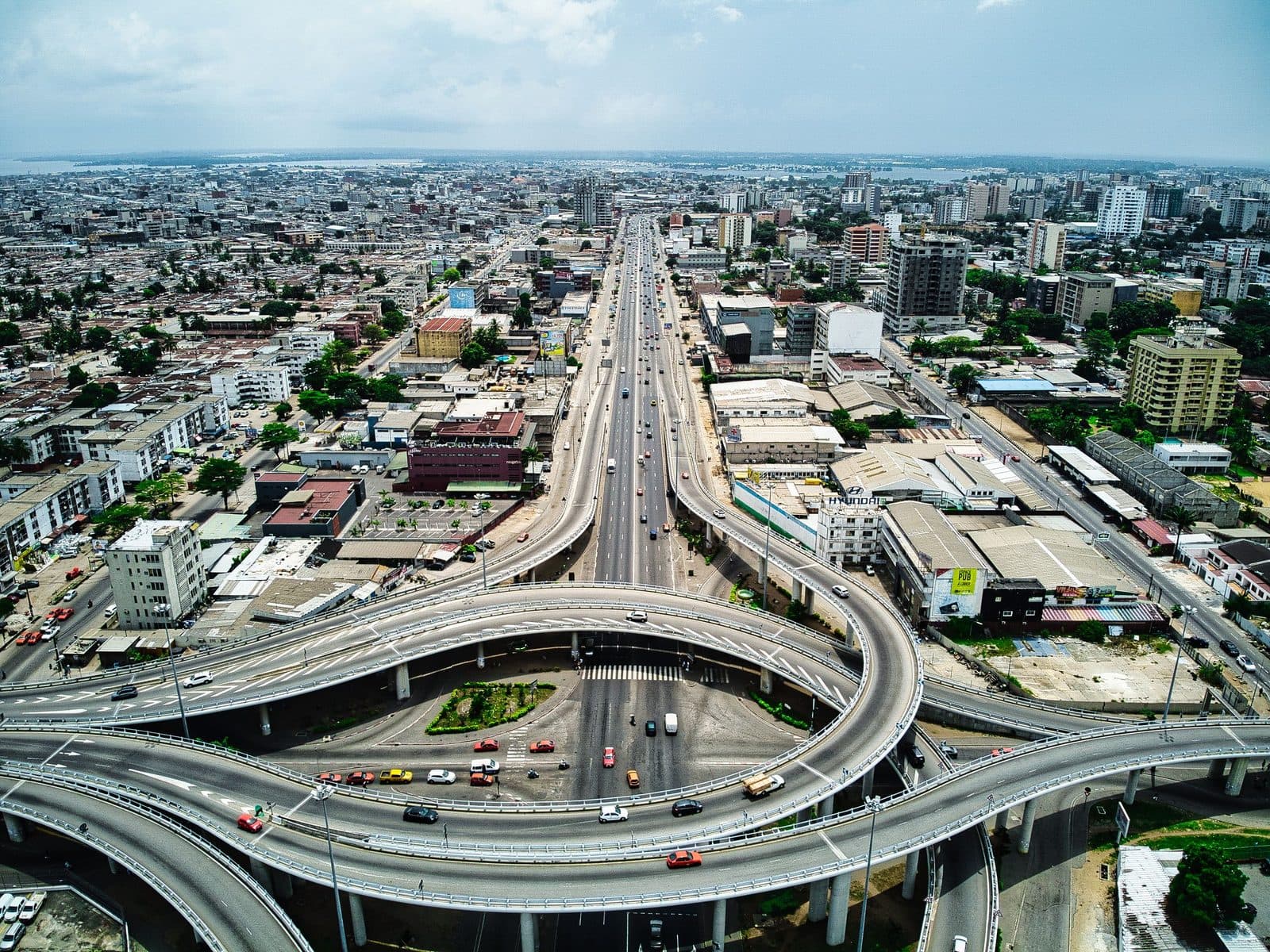
Moving back to live in Côte d’Ivoire after years in France, Belgium, Canada, the United States or elsewhere takes several months of preparation. This guide follows the steps in order, from the timetable to public support. Every rule it cites refers to an official body: check it with that body before acting.
Moving back to Côte d’Ivoire: where do you start?
Start by setting a departure date, then work backwards: allow six to twelve months for a permanent return with your family. Some steps are taken at the consulate, others with an administration in Abidjan, and others again require you to be there in person.
The move itself is most often the sticking point. The customs exemption requires your belongings to arrive in a single shipment, at the time you change residence. The rest of the timetable therefore hinges on the shipping date.
Also ask each organisation in your country of residence what you keep after you leave: contracts, accounts, pension, health insurance.
- Six to twelve months before: check the family’s passports and ID cards, start the recognition of your diplomas, review your pension rights, look for a job or prepare a business project.
- Three to six months before: get removal quotes, prepare the inventory of your belongings, obtain the certificate of change of residence, check the vehicle’s age if you plan to take it, tell the children’s school.
- The month you leave: cancel or transfer contracts, give your pension funds and your bank your new address, gather the originals in a bag you keep with you.
- On arrival: enrol with the CMU, exchange your driving licence, enrol the children at school, contact the Direction générale des Ivoiriens de l’extérieur (directorate general for Ivorians abroad).
Which papers should you prepare before moving back?
Before leaving, every member of the family must have a valid Ivorian identity document and up-to-date civil status records. They are the basis of almost every step on arrival: CMU enrolment, licence exchange, CNPS registration, school enrolment.
A child born abroad must be recorded in the Ivorian civil registry. If their birth, or your marriage, has not yet been transcribed, do it at your consulate before you leave.
Also gather the originals of your diplomas, employment certificates and payslips. The “Civil status and papers” guide sets out the consular procedures.
Moving your belongings: the customs exemption for a permanent return
Yes, there is an exemption: the regulatory part of the Ivorian Customs Code exempts from duties and taxes the used personal effects and household goods of Ivorians returning permanently to the country (Article 8).
To benefit from it, you must provide customs, with the import declaration, with a certificate of change of residence issued by the municipal authority of the place of departure. It comes with a detailed inventory, dated and signed by you, and a sworn statement that the effects are in use and have belonged to you for at least six months (Article 9).
The exemption has limits. Motor vehicles, motorcycles, aircraft, sports or pleasure boats and stocks of raw materials are excluded. Household provisions are accepted up to a normal family supply, except tobacco, cartridges, wine and spirits (Article 10). The household goods must be complete and in keeping with your situation, and the move must take place in a single shipment, at the same time as the change of residence (Article 11).
If your town hall abroad does not issue a certificate of change of residence, ask the Direction générale des Douanes (customs directorate) which document it accepts instead, and have the list of documents confirmed before shipping. If you are transferring a business, the same code provides a separate exemption for tools used for more than two years, with a declaration endorsed by the consul (Articles 12 to 15).
- Certificate of change of residence issued in the country of departure.
- Detailed inventory of all your belongings, dated and signed.
- Sworn statement: goods in use, yours for at least six months.
- A single shipment, at the time of the change of residence.
- No vehicle in the container under the exemption.
Importing your car: age limit and customs clearance
In principle, a used car imported into Côte d’Ivoire must not be more than five years old since it was first registered abroad. This is the rule in Decree No. 2017-792 of 6 December 2017, restated by Ivorian customs. Since 30 June 2018, a vehicle that does not meet it cannot cross the border to be registered.
Customs states that this limit does not apply to cars imported by Ivorian diplomats and State employees returning from a posting, or by Ivorians living abroad for work reasons. The page does not say what supporting documents are required. Before buying or shipping a car more than five years old, get written confirmation from customs. Customs announces a fine of 2,000,000 FCFA, plus the costs of re-export or destruction, for an offence.
The vehicle is not covered by the removal exemption: it pays duties and taxes. To find out the amount in advance, customs invites you to create a file on its online platform, SYDAM Auto. You need four photos of the vehicle, a photo of the odometer, the make, model, serial number (VIN), year and version. The platform values the vehicle and states the duties and taxes due.
To drive, you exchange your foreign licence for an Ivorian one. The Direction générale des transports terrestres et de la circulation (DGTTC, land transport and traffic directorate) first issues an exchange authorisation. It asks for a photocopy of the foreign licence, an original certificate of authenticity issued by the issuing country or its embassy, and a copy of your Ivorian identity document. The stated fee is 10,000 FCFA, with a processing time of 48 hours. Request the certificate of authenticity before you leave: it is easier to obtain from the country that issued the licence.
Where do you live when you arrive?
Plan temporary accommodation for the first few weeks. Visit in person, or have someone you trust visit, before signing a lease or paying an advance.
If you are thinking of buying land or a house, check the land situation before any payment: title, boundary marking, no dispute. The “Investing in Côte d’Ivoire” guide sets out the checks and the documents to demand.
Making housing easier to access for Ivorians abroad is among the priorities presented by the Direction générale des Ivoiriens de l’extérieur. Ask it about current programmes, and always check that a programme really is public before paying any money into it.
Finding a job or starting your own business
Start looking for work from abroad. Experience gained outside the country is an asset, provided you can back it up with employment certificates and recognised diplomas.
A foreign diploma may need to be recognised through an equivalence, in particular for a competitive examination, a public-sector job or further study. The application is lodged with the Direction de l’enseignement supérieur (higher education directorate), in Plateau, Abidjan. The file includes the baccalauréat, the intermediate and final diplomas, all transcripts (translated by a sworn translation firm if they are in a foreign language), a CV, a birth certificate extract, a certificate of authenticity, a sworn statement and an application form. The filing fee is 10,000 FCFA per application, then 5,000 FCFA from the second one. A baccalauréat obtained abroad is subject to a separate equivalence, with the DECO, according to the official page for the procedure.
To set up a business, ask the Centre de promotion des investissements en Côte d’Ivoire (CEPICI, investment promotion centre) directly about the documents and fees, rather than going through an unverified intermediary. The “Investing in Côte d’Ivoire” guide presents the formalities. Once you are self-employed, you must register with the CNPS: the fund states that every self-employed worker in activity, whatever their age or nationality, must do so.
Pension and social security: CNPS and foreign pensions
For an employee’s retirement pension, the CNPS (Caisse nationale de prévoyance sociale, the national social security fund) requires you to be 60, to have at least fifteen years of salaried work with contributions and to have stopped all salaried work. Early retirement is possible from 55, with a permanent reduction of 5% per year of early retirement, with some exceptions. Between two and fifteen years of contributions, the CNPS pays a single one-off allowance. From thirteen years, you can buy back the missing period.
With France, a social security agreement signed on 16 January 1985 has applied since 1 January 1987. It covers old-age insurance in particular. If you have contributed in both countries without exercising an option, each country calculates its own pension. When the insurance period falls short on one side, the periods completed in both countries can be added together (aggregation), provided you have worked for at least one year. The agreement also provides an option to have the whole pension paid by just one of the two schemes, with contributions transferred: before 55, the request must be made within three years of leaving, becomes irrevocable after three years, and the transfer takes place within the following two years.
For a pension paid by a foreign country, only the fund that pays it can tell you whether it will keep paying after you settle in Côte d’Ivoire, into which account and with what supporting documents, for example a life certificate each year. Ask it in writing before you leave. On its website, the CNPS mentions only one social security agreement with a country outside Africa: the one with France.
If you lived in a country with no agreement with Côte d’Ivoire, the CNPS opens its self-employed workers’ scheme to Ivorians in the diaspora. The basic contribution rate is 12%, that is between 3,600 and 21,600 FCFA a month. It gives entitlement to a pension at 60, with early retirement possible at 55.
Banking and money: organising your accounts
Don’t close your accounts abroad too soon: until your last salary payments and your pensions are settled, they remain useful. Ask your bank about its terms for a non-resident customer.
In Côte d’Ivoire, open an account as soon as possible, after comparing account fees and international transfer fees. Keep cash available for the first few weeks: housing deposit, customs clearance, travel.
To bring your savings home or receive regular transfers, compare the real cost of each transfer, fees and exchange rate included. The “Money transfers” guide explains how.
Health and the children’s schooling
Everyone who lives in Côte d’Ivoire, Ivorian or not, is entitled to the Couverture maladie universelle (CMU, universal health coverage). Enrolment is free and individual: each member of the family must enrol. The contribution is 1,000 FCFA per person per month. The card can only be used one month after the first contribution. The CMU then covers up to 70% of covered care, in approved facilities and pharmacies.
Before cancelling your cover abroad, compare supplementary insurance policies. The “Health and cover” guide sets out enrolment, vaccinations and insurance.
For the children, gather report cards, school certificates and diplomas before you leave, and plan their enrolment ahead: the Ivorian school calendar may not match that of your country of residence. The “Children’s schooling” guide covers enrolment, equivalences and national exams.
What public schemes support the diaspora’s return?
The State has a dedicated body: the Direction générale des Ivoiriens de l’extérieur (DGIE, directorate general for Ivorians abroad), attached to the ministry delegate for African Integration and Ivorians Abroad. It implements the government’s policy towards Ivorians living abroad.
Its priorities include action on return and resettlement, including help with economic, social and cultural reintegration, access to housing and support for the diaspora’s investment projects. The ministry also says it is continuing to set up a one-stop office for Ivorians abroad and a national programme for lasting reintegration.
Ask the ministry or your consulate which services are open at the time of your return, before paying a private intermediary who promises to speed up your procedures.
Checklist: the documents to take with you
Keep these originals in your hand luggage, with a digital copy of each. Never put them in the removal container.
- Passports and national identity cards for the whole family.
- Birth and marriage certificates, transcribed into the Ivorian civil registry.
- Certificate of change of residence, signed inventory and sworn statement for customs.
- Vehicle registration document and proof of first registration, if you are importing it.
- Driving licence and certificate of authenticity issued by the issuing country.
- Diplomas, transcripts and sworn translations.
- Employment certificates, payslips and career statements from each pension fund.
- The children’s report cards and school certificates.
- Medical records, vaccination records and current prescriptions.
Key points
- Start six to twelve months ahead and build the timetable around the date of the move.
- The customs exemption requires a certificate of change of residence, a signed inventory and goods owned for at least six months, shipped in a single consignment.
- Vehicles are excluded from the exemption; the age limit for an imported used car is in principle five years.
- Review your pension rights in each country before leaving, in writing.
- Start early on the recognition of your diplomas and the certificate of authenticity for your licence.
- Enrol each member of the family with the CMU as soon as you arrive: cover starts one month after the first contribution.
- Check amounts and times with the organisation concerned, never on the strength of a rumour.
Frequently asked questions
Can you move back to Côte d’Ivoire with your furniture without paying customs duty?
Yes, if you are returning permanently. The Ivorian Customs Code exempts used personal household goods. You need a certificate of change of residence issued in the country of departure, a detailed inventory, dated and signed, and a sworn statement that the goods have belonged to you for at least six months. The move must arrive in a single shipment. Vehicles are excluded.
What is the maximum age of a used car imported into Côte d’Ivoire?
Five years since first registration abroad for a passenger car, under Decree No. 2017-792. Ivorian customs states that this limit does not apply to Ivorians living abroad for work reasons, or to diplomats returning from a posting. Have customs confirm your situation before buying: a non-compliant vehicle exposes you to a fine of 2,000,000 FCFA.
Can my French pension be paid in Côte d’Ivoire?
Only your pension fund can confirm this in your case: ask it in writing for the conditions for payment abroad and the annual supporting documents required. The social security agreement between France and Côte d’Ivoire, in force since 1987, covers old-age insurance and allows periods of contributions in both countries to be added together when the period falls short on one side.
How many years of CNPS contributions do you need to receive a pension?
Fifteen years of salaried work with contributions, having reached 60 and stopped all salaried work. Early retirement is possible from 55, with a reduction of 5% per year of early retirement. Between two and fifteen years of contributions, the CNPS pays a single one-off allowance. From thirteen years, the missing period can be bought back.
How do you exchange a foreign driving licence in Côte d’Ivoire?
First request an exchange authorisation from the DGTTC. You need a photocopy of the foreign licence, an original certificate of authenticity issued by the issuing country or its embassy, and a copy of your Ivorian identity document. The stated fee is 10,000 FCFA, with a time of 48 hours. Obtain the certificate of authenticity before leaving your country of residence.
Do you need to have a foreign diploma recognised in Côte d’Ivoire?
Often, yes: an equivalence is required for a competitive examination, a public-sector job or further study. The file is lodged with the Direction de l’enseignement supérieur, with diplomas, transcripts translated by a sworn translation firm, a CV and a birth certificate extract. The fee is 10,000 FCFA per application. A foreign baccalauréat falls under a separate procedure with the DECO.
How much does the CMU cost and when can you use it?
Enrolment in the Couverture maladie universelle is free; the contribution is 1,000 FCFA per person per month. Each member of the family enrols separately. The card can only be used one month after the first contribution. It then covers up to 70% of covered care in approved facilities and pharmacies.
Is there a public body to support the diaspora’s return?
Yes. The Direction générale des Ivoiriens de l’extérieur (DGIE), attached to the ministry responsible for Ivorians abroad, counts among its priorities return, economic and social reintegration, access to housing and support for investment projects. Contact it, or your consulate, before paying a private intermediary for your procedures.
Official sources
- Ivorian customs — Customs Code, regulatory part (Articles 8 to 15), in French
- Ivorian customs — Frequently asked questions (vehicle age limit, SYDAM Auto), in French
- DGTTC — Authorisation to exchange a foreign licence for an Ivorian licence, in French
- CNPS — Employees: retirement pension and agreements, in French
- CNPS — Self-employed workers and the diaspora, in French
- CNPS — Ivorian-French social security agreement, in French
- CMU directorate general — Frequently asked questions, in French
- Ivorian public service — Applying for a diploma equivalence, in French
- Embassy of Côte d’Ivoire in France — Duties of the Direction générale des Ivoiriens de l’extérieur, in French
- Ministry delegate for African Integration and Ivorians Abroad — Reintegration schemes, in French
Last reviewed on 1 October 2026. Rules change: always check with the organisation concerned before taking any step.