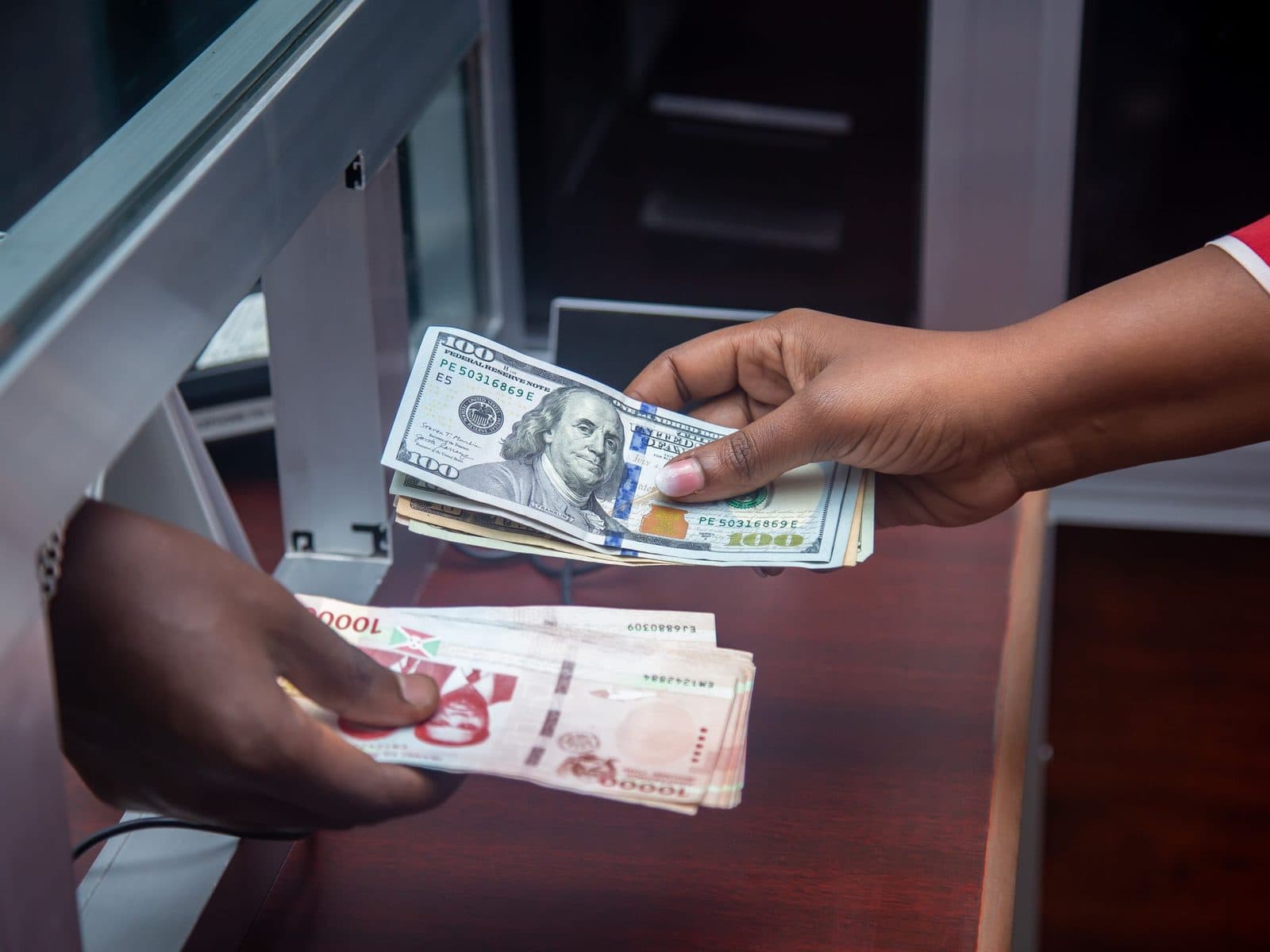
Sending money to Côte d’Ivoire from France, Belgium, Canada, the United States or the United Kingdom costs more or less depending on the channel you choose. This guide explains how to read the real price of a transfer, choose between a bank, a money transfer operator and mobile money, comply with the exchange rules of the UEMOA and outwit scams. It is based on official Ivorian and regional texts.
What is the exchange rate between the euro and the CFA franc?
The rate is fixed: 1 euro is worth exactly 655.957 CFA francs (FCFA). This parity has applied since 1 January 1999 to the West African CFA franc, the currency of Côte d’Ivoire and the other States of the UEMOA (West African Economic and Monetary Union). It does not change from one day to the next. A provider may apply a less favourable rate, but the official parity does not move.
This fixed parity gives you a precise benchmark. For €100, your relative should receive 65,595.70 FCFA before any fees. For €200, 131,191.40 FCFA. For €500, 327,978.50 FCFA. Any amount received below this calculation is a cost: fees, a margin on the exchange rate, or both.
Côte d’Ivoire’s Guichet unique du commerce extérieur (foreign trade one-stop shop) publishes customs exchange rates. The euro is shown there at 655.957 FCFA, while the rate of the dollar or the pound sterling moves with the markets.
How much does a money transfer to Côte d’Ivoire really cost?
The real cost of a transfer is the difference between what you pay and the value of what your relative receives. It adds up two things: the fees shown and the margin taken on the exchange rate. A “no fee” offer can therefore be expensive if the rate applied is unfavourable.
From the euro area, the calculation is simple thanks to the fixed parity. Example: you pay €205 (€200 sent and €5 in fees) and your relative receives 129,000 FCFA. At the fixed rate, 129,000 FCFA is worth about €196.66. The total cost is therefore about €8.34, a little over 4% of the amount paid. The €5 fee was only part of it.
From Canada, the United States, the United Kingdom or Switzerland, there is no fixed rate. Since the CFA franc is pegged to the euro, its value against the dollar, the pound or the Swiss franc follows that of the euro against those currencies. The provider applies its own rate, often less favourable than the market rate of the day. Compare that rate with a reference rate published the same day, and above all compare the final amount received.
- The total amount debited, fees included.
- The exchange rate applied, compared with 655.957 FCFA to the euro or with the day’s rate for another currency.
- The exact amount received in FCFA, guaranteed in writing before you confirm.
- Any withdrawal fees paid by the recipient on arrival.
Bank, money transfer operator or mobile money: which channel should you choose?
There are three main families of channels, and none is the cheapest in every case. The right choice depends on the amount, how fast you need it to arrive and how your relative can receive the money.
An international bank transfer goes from an account abroad to a bank account in Côte d’Ivoire. It suits large amounts and leaves a complete record, but it can take several days and carry high fixed fees for small sums.
Money transfer companies operate through agencies or online. The recipient withdraws cash at a payout point, or receives the money into an account. It is often fast, and prices vary a great deal from one operator to another.
Services that send to an electronic money account (“mobile money”) credit the recipient’s wallet on their phone directly. This is convenient for small amounts and for relatives who do not have a bank account.
Whatever the channel, the rule is the same. In the UEMOA, foreign exchange transactions and transfers abroad can only go through the BCEAO (Central Bank of West African States), the postal administration, a bank approved as an intermediary or an approved bureau de change (Article 4 of Regulation No. 06/2024/CM/UEMOA). A reputable service can tell you which approved partner your transfer goes through.
Sending money to a mobile money account from abroad
Yes, an Ivorian mobile money account can be credited from abroad, but always under the responsibility of an approved bank. Regulation No. 06/2024/CM/UEMOA provides that electronic money institutions and payment institutions receive funds from a State outside the UMOA under the supervision of an approved intermediary, with which they must deposit all the foreign currency received (Articles 26 and 27). These institutions cannot, however, make payments abroad.
Before sending, check that the institution holding your relative’s account is authorised. The DECFinEx, the Treasury directorate responsible in particular for external finance, publishes the list of approved electronic money issuers in Côte d’Ivoire, and that of payment institutions. If a service is not on it, ask it under which approval it operates.
Electronic money accounts have balance and transaction limits, set by the regulations and by each issuer. A transfer that is too large may be blocked or refused. Ask the issuer about these limits before an unusual transfer.
Once the money has been received, your relative can move it between banks, microfinance institutions and electronic money issuers. Since 30 September 2025, the BCEAO has operated an interoperable instant payment platform (PI-SPI), available around the clock in the eight UEMOA countries. Banks, microfinance institutions and electronic money issuers are connected to it.
How can you send money to Côte d’Ivoire for less?
To pay less, compare the amount received in FCFA for the same amount paid, on the same day, on at least three services. It is the only figure that includes both the fees and the exchange rate.
Simulate the exact amount you intend to send: price scales change by band, and a service that is cheap for €100 may be less so for €1,000. Repeat the comparison from time to time, as prices change.
The World Bank maintains a public database, Remittance Prices Worldwide, which compares the cost of sending small sums between countries. We were unable to consult it during this review: check that it covers your route, and the date of its data, before relying on it.
- Prefer one combined transfer to several small ones if the fees are fixed.
- Pay by bank transfer or debit card rather than cash when the service allows it, and check whether the payment method changes the price.
- Be wary of a “promotional” rate reserved for the first transfer.
- Check who pays the withdrawal fees on arrival: you or your relative.
Is there a limit on sending money to Côte d’Ivoire?
The articles of the regional regulation set no general ceiling on the money the diaspora sends to relatives. Regulation No. 06/2024/CM/UEMOA of 20 December 2024, which governs financial relations with other countries, expressly classes “migrants’ remittances and gifts” as current transactions. It replaced Regulation No. 09/2010/CM/UEMOA.
Payments for current transactions are carried out freely by an approved intermediary, on the basis of supporting documents listed by the BCEAO. Transfers that do not exceed a threshold set by the BCEAO are exempt from this (Article 9). That threshold is set in the BCEAO’s implementing texts: ask your bank for it.
There are practical limits, though. Each provider sets its own ceilings per transfer, per day or per month. Mobile money accounts have balance limits. And anti-money-laundering rules require checks: Ordinance No. 2023-875 of 23 November 2023 requires financial institutions to identify their customers for any national or international transfer of funds and, for an unusual transaction or an unusually high amount, to enquire about the origin and destination of the funds (Articles 17 and 21).
For a large amount, therefore, have supporting documents ready: an identity document, proof of where the funds come from (payslips, statements, deed of sale), and the purpose of the transfer (quote, contract, invoice). Ask your bank or the provider for the exact list before sending.
Opening a CFA franc account in Côte d’Ivoire when you live abroad
Yes, it is now simpler. According to the Direction générale du Trésor et de la Comptabilité publique (the Treasury), BCEAO note No. 001-03-2026 of 13 March 2026 allows UEMOA nationals living abroad to open CFA franc accounts with the Union’s banks, on terms aligned with those for residents.
Anti-money-laundering requirements still apply, in particular for identification and traceability. Some transactions, such as access to credit, remain subject to prior authorisation.
Under the exchange regulations, a person whose main centre of economic interest is abroad is a “non-resident”. That is your status if you live and work outside the UEMOA. Raise it with the bank when you open the account: it determines the rules that apply to your account.
An account in your name in Côte d’Ivoire lets you send money once, then pay locally or pass sums to your relatives as needed. Compare account, incoming transfer and card fees before choosing.
How do you avoid money transfer scams?
Most scams rely on urgency and on a request for money or bank details. A fake relative in trouble, a fake lottery win, a fake inheritance held up in Abidjan or so-called “processing fees”: the story changes, the method stays the same.
The embassy of Côte d’Ivoire in France reminds people: never give out your bank details or a copy of your signature, and never send money for “processing fees” that will keep coming one after another. An offer that seems too good to be true is a scam.
If you have given out bank details, contact your bank immediately. If you have already paid, alert the transfer provider without delay to try to block the withdrawal, then file a complaint with the police in your country of residence.
- Confirm any request for money with a call you make yourself, to the number you know.
- Never give out a withdrawal code, a PIN or a code received by text message.
- Don’t send money to someone you have never met.
- Never send cash by post or with a traveller.
- Never use an informal channel: if something goes wrong, you will have neither recourse nor proof.
Regular transfers: organising family support and keeping a record
For monthly support, agree a clear arrangement with your relative: one channel, one day, one amount. Record their exact details and their full name as it appears on their identity document, once.
Any change of number, account or beneficiary must be confirmed in a conversation. A message alone, even from a known number, is not enough: a phone can be stolen or a SIM card hijacked.
Keep proof of every transfer: date, amount paid, amount received, beneficiary, transaction number. One folder per year, on paper or digital, is enough. This proof is useful in a dispute, to show where funds came from for a large purchase, and for any tax formalities.
- Protect your online access: a unique password and two-step verification.
- Check your statements and report any transaction you don’t recognise without delay.
Funding a building or a project in Côte d’Ivoire
For a project, send the money to a bank account, in the right person’s name, and keep a record of every payment. Cash handed to an intermediary is the leading cause of disputes and losses.
Pay in stages, on presentation of invoices or progress reports. For land, pay the funds by transfer to the notary, never to a canvasser. Opening an account in your name in Côte d’Ivoire can help you keep control of spending.
Regulation No. 06/2024/CM/UEMOA declares foreign direct investment in the UEMOA free, subject to national formalities, and requires a declaration for statistical purposes for some transactions. The purchase of property by a non-resident may fall under this regime: ask your bank which formalities apply in your case.
For choosing land, title deeds, the notary and setting up a business, see our “Investing in Côte d’Ivoire” guide.
Are transfers to Côte d’Ivoire tax-deductible?
The answer depends on your country of residence, not on Côte d’Ivoire. Each State has its own rules on financial support for family, gifts and accounts held abroad. This guide cannot summarise them with certainty.
In some countries, support paid to a parent in need may give entitlement to a tax benefit, under strict conditions and with supporting documents. In others, nothing is provided. A bank account opened outside your country of residence may also have to be declared to the tax authorities.
Ask the tax authorities of your country of residence or an approved professional. In any case, keep proof of your transfers and, if you claim the benefit, proof of the need of the person you support.
Key points
- 1 euro = 655.957 FCFA, always: any gap from this calculation is a cost.
- Compare the amount received in FCFA, not just the fees shown.
- From a non-euro currency, check the rate applied on the day.
- Only use services that go through approved institutions; the official lists are published by the Treasury.
- For a large amount, prepare proof of identity, of where the funds come from and of their purpose.
- Confirm any change of beneficiary with a call you make yourself.
- Faced with an urgent request for money, check before paying.
- Keep proof of every transfer, at least by year.
- For a project, pay by transfer, in stages and against invoices.
Frequently asked questions
How much is 1 euro in CFA francs?
1 euro is worth exactly 655.957 CFA francs. This parity has been fixed since 1 January 1999 for the West African CFA franc, used in Côte d’Ivoire. It does not vary by day or by provider. For €100, your relative should therefore receive 65,595.70 FCFA before fees. A lower amount reveals fees or a margin on the exchange rate.
What is the cheapest way to send money to Côte d’Ivoire?
No channel is the cheapest in every case. The price depends on the amount, the country you send from, the payment method and how the money is received. To find the best offer, compare on the same day, on at least three services, the exact amount received in CFA francs for the sum you pay. That figure includes both the fees and the exchange rate.
Can you send money to an Ivorian mobile money account from France?
Yes. Some transfer services credit an Ivorian electronic money account directly, through a partner bank and an approved issuer. Check that the account’s issuer is on the official list published by the Ivorian Treasury. Also ask about the limits on your relative’s wallet: a transfer that is too large may be blocked.
Is there a maximum amount for sending money to Côte d’Ivoire?
The UEMOA exchange regulations set no general ceiling on migrants’ remittances, which are current transactions. However, each provider applies its own ceilings, and mobile money accounts have them too. Above a threshold set by the BCEAO, supporting documents may be requested, and anti-money-laundering rules always require the customer to be identified.
What supporting documents do you need for a large transfer to Côte d’Ivoire?
Have a valid identity document, proof of where the funds come from, such as payslips, bank statements or a deed of sale, and a document on the purpose of the transfer, such as a quote or a contract. The exact list depends on the institution and the amount. Ask your bank or the provider for it before sending, to avoid a block.
Can an Ivorian living abroad open a CFA franc account in Côte d’Ivoire?
Yes. According to the Ivorian Treasury, a BCEAO note of 13 March 2026 allows UEMOA nationals living abroad to open CFA franc accounts with the Union’s banks, on terms aligned with those for residents. Identity checks remain compulsory, and access to credit remains subject to prior authorisation.
What should I do if I have sent money to a scammer?
Act fast. Contact the transfer service immediately to try to block the withdrawal, then your bank if you gave out bank details. Then file a complaint with the police in your country of residence. Keep all the evidence: receipts, messages, phone numbers. Don’t pay any “fees” you are asked for to get your money back.
Why does my relative receive less than expected?
The gap usually has three causes: sending fees, a margin on the exchange rate, or withdrawal fees charged on arrival. From the euro area, multiply the amount sent by 655.957 to get the theoretical amount in CFA francs. The difference from the amount received is the total cost of the transaction.
Official sources
- Regulation No. 06/2024/CM/UEMOA of 20 December 2024 on external financial relations (DECFinEx, Treasury), in French
- Ordinance No. 2023-875 of 23 November 2023 on combating money laundering (Official Gazette, CENTIF-CI), in French
- Treasury — The BCEAO opens FCFA accounts to the diaspora (note No. 001-03-2026), in French
- DECFinEx — List of approved electronic money issuers at 31 December 2025, in French
- DECFinEx — List of payment institutions at 31 December 2025, in French
- Foreign trade one-stop shop — Customs exchange rates (XOF), in French
- Treasury — Prospectus for the 2018 international bond issue (fixed parity €1 = 655.957 FCFA since 1999)
- Treasury — Launch of the PI-SPI instant payment platform by the BCEAO, in French
- Embassy of Côte d’Ivoire in France — Scams, fraud and swindles, in French
Last reviewed on 1 October 2026. Rules change: always check with the organisation concerned before taking any step.